
Description
Description
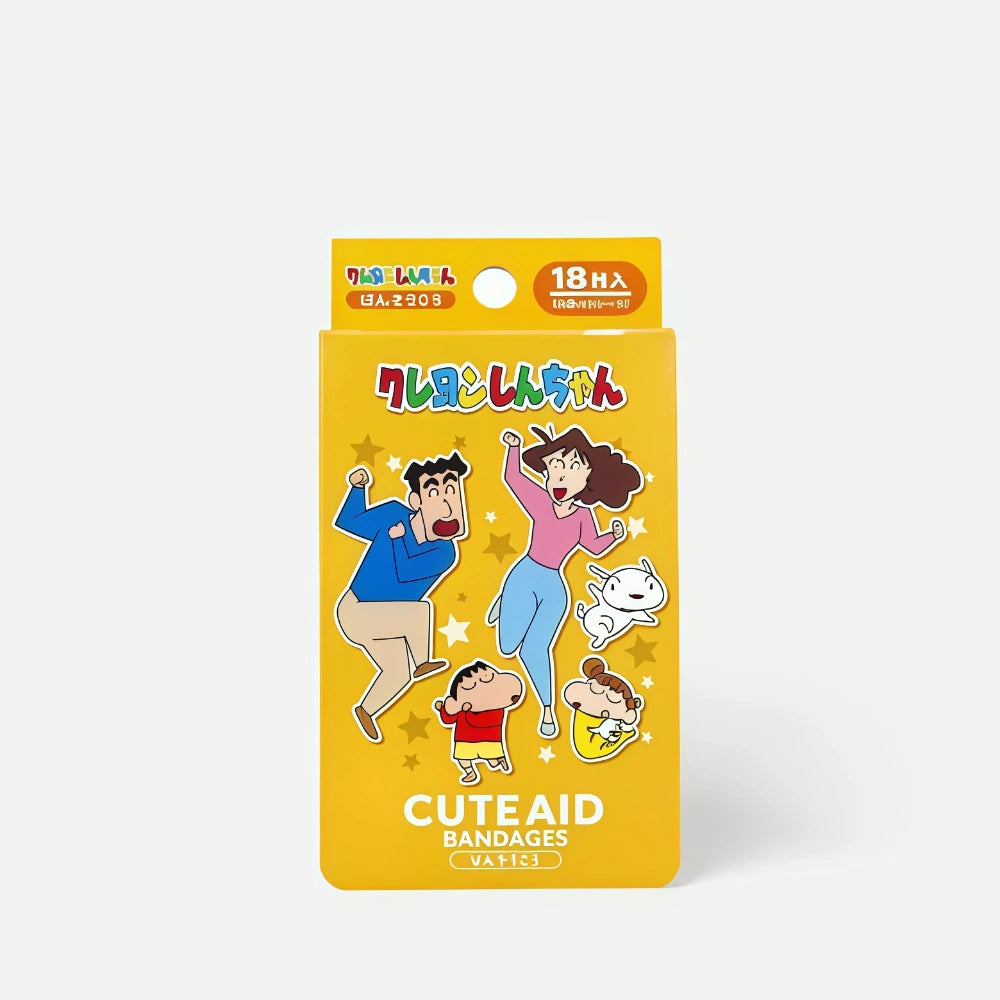
- SANTAN Emergency Bandages Crayon Shinchan Family 18pcs is a daily-use sterile emergency bandage product co-branded with the classic cartoon "Crayon Shinchan". It integrates "practical wound care" and "cute IP design"—each bandage features vivid printed patterns of Crayon Shinchan, his family (e.g., father Hiroshi, mother Misae, sister Himawari), and classic characters, making it more acceptable for children and cartoon lovers.
- Made in :Japan
Ingredients
Ingredients
The main raw materials of the product comply with medical device safety standards, mainly divided into functional structural materials and auxiliary materials:
1. Functional Structural Materials (Core Components)
Breathable Non-woven Fabric (Surface Layer): Made of polypropylene (PP) fiber—lightweight, soft, and breathable, with certain waterproof performance (prevents external water from entering the wound) and good tensile strength (not easy to break when moving joints). It is non-irritating to the skin and meets the biocompatibility requirements of medical materials.
Absorbent Cotton Pad (Middle Layer): Made of medical-grade degreased cotton—after high-temperature sterilization, it has strong water absorption capacity, can quickly absorb wound exudate (such as tissue fluid), keep the wound dry, and does not shed lint (avoiding lint residue in the wound and causing infection).
Medical Pressure-Sensitive Adhesive (Bottom Layer): A hypoallergenic acrylic adhesive—has moderate adhesion (adheres firmly but is easy to peel off), does not contain formaldehyde, heavy metals, or other harmful substances, and does not leave residual glue on the skin. It is specially optimized for children’s delicate skin to reduce irritation.
2. Auxiliary Materials
Protective Film/Paper (Adhesive Cover): Made of polyethylene (PE) film or silicone-coated release paper—covers the adhesive layer to prevent dust and contamination before use, and is easy to peel off when in use.
Printing Ink (Cartoon Pattern): Food-grade or medical-grade water-based ink—non-toxic, non-irritating, and does not contain volatile organic compounds (VOCs) or heavy metals (such as lead, mercury). The ink is printed on the surface non-woven fabric, and there is no direct contact with the wound, ensuring safety.
Sterilization Auxiliary (Ethylene Oxide): Used for sterilizing the finished product—after sterilization, the residual amount of ethylene oxide is strictly controlled below the national safety standard (≤10μg/g), ensuring no harm to the human body when the product is used.
The exact ingredient list shall be subject to the "Raw Materials" or "Composition" label on the product packaging (the brand may slightly adjust the material specifications according to different production batches and regional medical standards, but all comply with the safety requirements of daily medical emergency bandages).
How to Use
How to Use
Clean the Wound First (Key Step): Before using the bandage, rinse the minor wound (scrape, scratch) with clean running water (or normal saline) for 30 seconds to 1 minute to remove dirt, dust, or residual debris on the wound surface. Pat the area around the wound dry with a clean cotton pad or tissue (do not rub the wound directly).
Open the Packaging: Tear open the sterile packaging of the bandage along the pre-cut notch (do not touch the absorbent pad in the middle with your fingers to avoid contaminating the sterile area).
Remove the Protective Film: Peel off the protective paper (or plastic film) on the bottom adhesive layer of the bandage—hold the edge of the bandage with your fingers, and avoid touching the adhesive part and the absorbent pad.
Apply to the Wound: Align the absorbent pad in the middle of the bandage with the center of the wound, then stick the adhesive parts on both sides to the skin around the wound. Press gently with your fingers for 10-15 seconds to ensure the bandage adheres firmly (pay attention to the tension—do not stick too tightly, especially on joint parts, to avoid affecting blood circulation).
Replace Regularly: Replace the bandage every 4-6 hours, or immediately if it gets wet, soiled, or the absorbent pad is saturated with exudate—this keeps the wound dry and clean, preventing bacterial growth.
Remove Correctly: When removing the bandage, gently peel it off from one end to the other along the direction of hair growth (for areas with hair) to reduce skin irritation. If the adhesive is stuck to the skin, you can moisten the edge with a small amount of warm water to make it easier to peel off.
Warning: Do not use on deep wounds, bleeding wounds, or infected wounds (with redness, swelling, pus); if the wound does not heal for more than 3 days, or if symptoms such as redness, swelling, pain, or fever occur, stop using and consult a doctor immediately.
SANTAN Emergency Bandages Crayon Shinchan Family 18pcs
SANTAN Emergency Bandages Crayon Shinchan Family 18pcs
Vendor: SANTAN
Available in stock
Couldn't load pickup availability
Description
Description
- SANTAN Emergency Bandages Crayon Shinchan Family 18pcs is a daily-use sterile emergency bandage product co-branded with the classic cartoon "Crayon Shinchan". It integrates "practical wound care" and "cute IP design"—each bandage features vivid printed patterns of Crayon Shinchan, his family (e.g., father Hiroshi, mother Misae, sister Himawari), and classic characters, making it more acceptable for children and cartoon lovers.
- Made in :Japan
Ingredients
Ingredients
The main raw materials of the product comply with medical device safety standards, mainly divided into functional structural materials and auxiliary materials:
1. Functional Structural Materials (Core Components)
Breathable Non-woven Fabric (Surface Layer): Made of polypropylene (PP) fiber—lightweight, soft, and breathable, with certain waterproof performance (prevents external water from entering the wound) and good tensile strength (not easy to break when moving joints). It is non-irritating to the skin and meets the biocompatibility requirements of medical materials.
Absorbent Cotton Pad (Middle Layer): Made of medical-grade degreased cotton—after high-temperature sterilization, it has strong water absorption capacity, can quickly absorb wound exudate (such as tissue fluid), keep the wound dry, and does not shed lint (avoiding lint residue in the wound and causing infection).
Medical Pressure-Sensitive Adhesive (Bottom Layer): A hypoallergenic acrylic adhesive—has moderate adhesion (adheres firmly but is easy to peel off), does not contain formaldehyde, heavy metals, or other harmful substances, and does not leave residual glue on the skin. It is specially optimized for children’s delicate skin to reduce irritation.
2. Auxiliary Materials
Protective Film/Paper (Adhesive Cover): Made of polyethylene (PE) film or silicone-coated release paper—covers the adhesive layer to prevent dust and contamination before use, and is easy to peel off when in use.
Printing Ink (Cartoon Pattern): Food-grade or medical-grade water-based ink—non-toxic, non-irritating, and does not contain volatile organic compounds (VOCs) or heavy metals (such as lead, mercury). The ink is printed on the surface non-woven fabric, and there is no direct contact with the wound, ensuring safety.
Sterilization Auxiliary (Ethylene Oxide): Used for sterilizing the finished product—after sterilization, the residual amount of ethylene oxide is strictly controlled below the national safety standard (≤10μg/g), ensuring no harm to the human body when the product is used.
The exact ingredient list shall be subject to the "Raw Materials" or "Composition" label on the product packaging (the brand may slightly adjust the material specifications according to different production batches and regional medical standards, but all comply with the safety requirements of daily medical emergency bandages).
How to Use
How to Use
Clean the Wound First (Key Step): Before using the bandage, rinse the minor wound (scrape, scratch) with clean running water (or normal saline) for 30 seconds to 1 minute to remove dirt, dust, or residual debris on the wound surface. Pat the area around the wound dry with a clean cotton pad or tissue (do not rub the wound directly).
Open the Packaging: Tear open the sterile packaging of the bandage along the pre-cut notch (do not touch the absorbent pad in the middle with your fingers to avoid contaminating the sterile area).
Remove the Protective Film: Peel off the protective paper (or plastic film) on the bottom adhesive layer of the bandage—hold the edge of the bandage with your fingers, and avoid touching the adhesive part and the absorbent pad.
Apply to the Wound: Align the absorbent pad in the middle of the bandage with the center of the wound, then stick the adhesive parts on both sides to the skin around the wound. Press gently with your fingers for 10-15 seconds to ensure the bandage adheres firmly (pay attention to the tension—do not stick too tightly, especially on joint parts, to avoid affecting blood circulation).
Replace Regularly: Replace the bandage every 4-6 hours, or immediately if it gets wet, soiled, or the absorbent pad is saturated with exudate—this keeps the wound dry and clean, preventing bacterial growth.
Remove Correctly: When removing the bandage, gently peel it off from one end to the other along the direction of hair growth (for areas with hair) to reduce skin irritation. If the adhesive is stuck to the skin, you can moisten the edge with a small amount of warm water to make it easier to peel off.
Warning: Do not use on deep wounds, bleeding wounds, or infected wounds (with redness, swelling, pus); if the wound does not heal for more than 3 days, or if symptoms such as redness, swelling, pain, or fever occur, stop using and consult a doctor immediately.